
Neurosurgical Nursing: Neurologic Assessment, Intracranial Pressure and Postoperative Care
This course provides a comprehensive review of key topics in neurosurgical nursing. It is designed for nurses who care for patients with neurological conditions, particularly those requiring neurosurgical intervention.
- Contact hours
- 5
- Format
- Self-paced, online
- Last reviewed
- Sep 19, 2026
$5.00or included with All-Access
$5 per contact hour · 5 contact hours
Secure checkout. Certificates issue instantly and stay in your vault even after a subscription ends.
- No post-test required · unlimited retakes · evaluation and attestation always required
Course Purpose
This course provides a comprehensive review of key topics in neurosurgical nursing. It is designed for nurses who care for patients with neurological conditions, particularly those requiring neurosurgical intervention.
Continuing Education Credit Designation
This educational activity is credited for 5 contact hours at completion of the activity.
Overview
In neurosurgical practice, meticulous observation and timely intervention are paramount. The ability to quickly and accurately assess a patient's neurological status forms the bedrock of safe and effective care. Recognizing subtle changes in consciousness, pupil responses, or motor function can be the difference between recovery and permanent disability. This foundational understanding allows nurses to anticipate potential complications and respond proactively to protect brain function. This course delves into these vital aspects of neurosurgical nursing, starting with core assessment techniques and progressing to complex physiological concepts.
Objectives
Upon completion of this independent study, the learner will be able to:
- Describe the three components of the Glasgow Coma Scale and the scoring range the retrieved review states for each.
- Explain why component scores are documented individually with date and time rather than only as a total.
- List the stated confounders that limit Glasgow Coma Scale assessment, including intubation, facial and periorbital injury, spinal cord injury, sedation and paralysis.
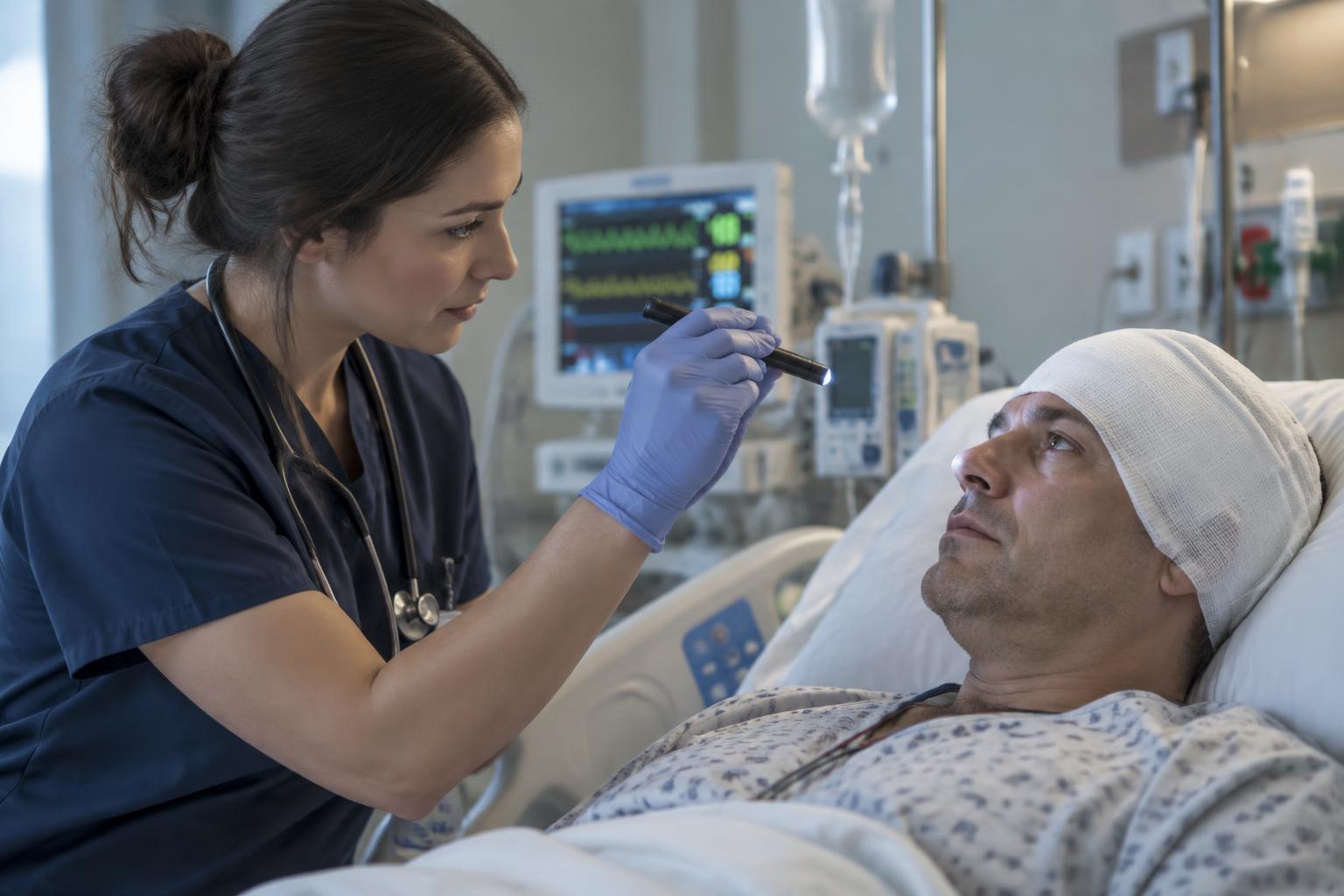
- Perform and describe the pupillary light reflex as the retrieved cranial nerve review states it, distinguishing direct from consensual response and afferent from efferent defects.
- Define cerebral perfusion pressure, state its normal range, and explain how intracranial pressure and mean arterial pressure change it.
- Explain intracranial compliance and why pressure rises sharply once compensatory mechanisms are overwhelmed.
- Recognize the secondary injury drivers after traumatic brain injury and the assessment findings associated with named herniation syndromes.
- Describe the nursing monitoring list stated for an external ventricular drain, including hourly drainage, oscillation, wound seepage, drain height, zeroing landmark and frequent neurological assessment.
- Identify craniotomy complications and surgical site infection risk factors that shape postoperative nursing observation.
- Describe the prolonged course of aneurysmal subarachnoid hemorrhage including rebleeding, vasospasm and delayed cerebral ischemia, and the stated proportions affected.
- Recognize status epilepticus using the stated five-minute definition and describe initial monitoring priorities.
- Differentiate cerebral salt wasting from the syndrome of inappropriate antidiuretic hormone secretion on volume status and treatment direction, and recognize arginine vasopressin deficiency.
- Explain how a documented but poorly communicated motor change contributed to permanent paralysis in the retrieved case commentary, and what escalation behaviour the commentary recommends.
Policy Statement
This activity has been planned and implemented in accordance with the policies of CheapCEForNurses.com. This course should be used for informational purposes only and should not be used to diagnose, treat, prescribe, recommend, or initiate therapies or treatments in any setting. This course is copyrighted by Cheap CE For Nurses, Inc. and may not be replicated, copied, or dispersed without written consent.
Disclosures
Cheap CE For Nurses, Inc. and its authors have no disclosures. There is no commercial support.
Who this course is for:
Healthcare professionals who want to review neurologic assessment, intracranial pressure, and postoperative neurosurgical care.
Course outline
12 sections · finish in any order across devices
- 1
Course overview and learning objectives
- 2
Introduction
- 3
Scoring Consciousness: The Glasgow Coma Scale as a Communication Tool
- 4
Pupils and Cranial Nerves: A Technique That Has to Be Done the Same Way Every Time
- 5
Pressure and Perfusion: The Physiology Behind Every Neuro Observation
- 6
Traumatic Brain Injury: Secondary Injury, Herniation Patterns and the Nurse's Window
- 7
External Ventricular Drains: The Monitoring List and Why Each Item Exists
- 8
Craniotomy Care: Positioning, Drains, Complications and Infection Risk
- 9
Aneurysmal Subarachnoid Hemorrhage: A Long Illness With Several Danger Windows
- 10
After Spine Surgery, and the Communication Failure That Costs Function
- 11
Nursing Considerations
- 12
Conclusion
References
The full reference list is included inside the course, after the Conclusion.
Purchase required to access Fast Facts, pretests, posttests, course evaluations and certificates. Our one free course is the only exception.
This Course Satisfies
Requirement summaries come from our state requirement records. All Users of Cheap CE For Nurses’s website and content are responsible for knowing their state’s license and renewal requirements.
Questions about this course
- How many contact hours is Neurosurgical Nursing: Neurologic Assessment, Intracranial Pressure and Postoperative Care?
- 5 contact hours, credited at completion.
- How much does it cost?
- $5.00 on its own, or included with All-Access ($29.99 a year, renewing yearly until you cancel).
- Can I listen instead of reading?
- Yes — every section can be read or heard, on your phone or computer.
- When do I get my certificate?
- As soon as you finish the course requirements and the evaluation. It stays in your account.
Update history
Take this course and the rest of the library
Unlimited annual access covers every course, every state you track, and your certificates forever.
ENROLLStill have a question?
Ask about requirements, a course, pricing or your license. Answers come from our own course list and state notes.
Answers come from Cheap CE For Nurses's own course list and our notes on state requirements. Always check your board's own rules before you count hours.