Health Visiting and Home-Based Child and Family Nursing
This nursing continuing-education course provides an overview of health visiting practice, including the purpose and boundaries of home-based family nursing, conducting a safe and respectful home visit, maternal perinatal mental health, newborn and preterm vulnerability, safe infant sleep, infant feeding support, developmental surveillance and early referral, immunizations, and household hazards.
- Contact hours
- 3
- Format
- Self-paced, online
- Last reviewed
- Sep 19, 2026
$15.00or included with All-Access
$5 per contact hour · 3 contact hours
Secure checkout. Certificates issue instantly and stay in your vault even after a subscription ends.
- No post-test required · unlimited retakes · evaluation and attestation always required
Course Purpose
This nursing continuing-education course provides an overview of health visiting practice, including the purpose and boundaries of home-based family nursing, conducting a safe and respectful home visit, maternal perinatal mental health, newborn and preterm vulnerability, safe infant sleep, infant feeding support, developmental surveillance and early referral, immunizations, and household hazards.
Continuing Education Credit Designation
This educational activity is credited for 3 contact hours at completion of the activity.
Overview
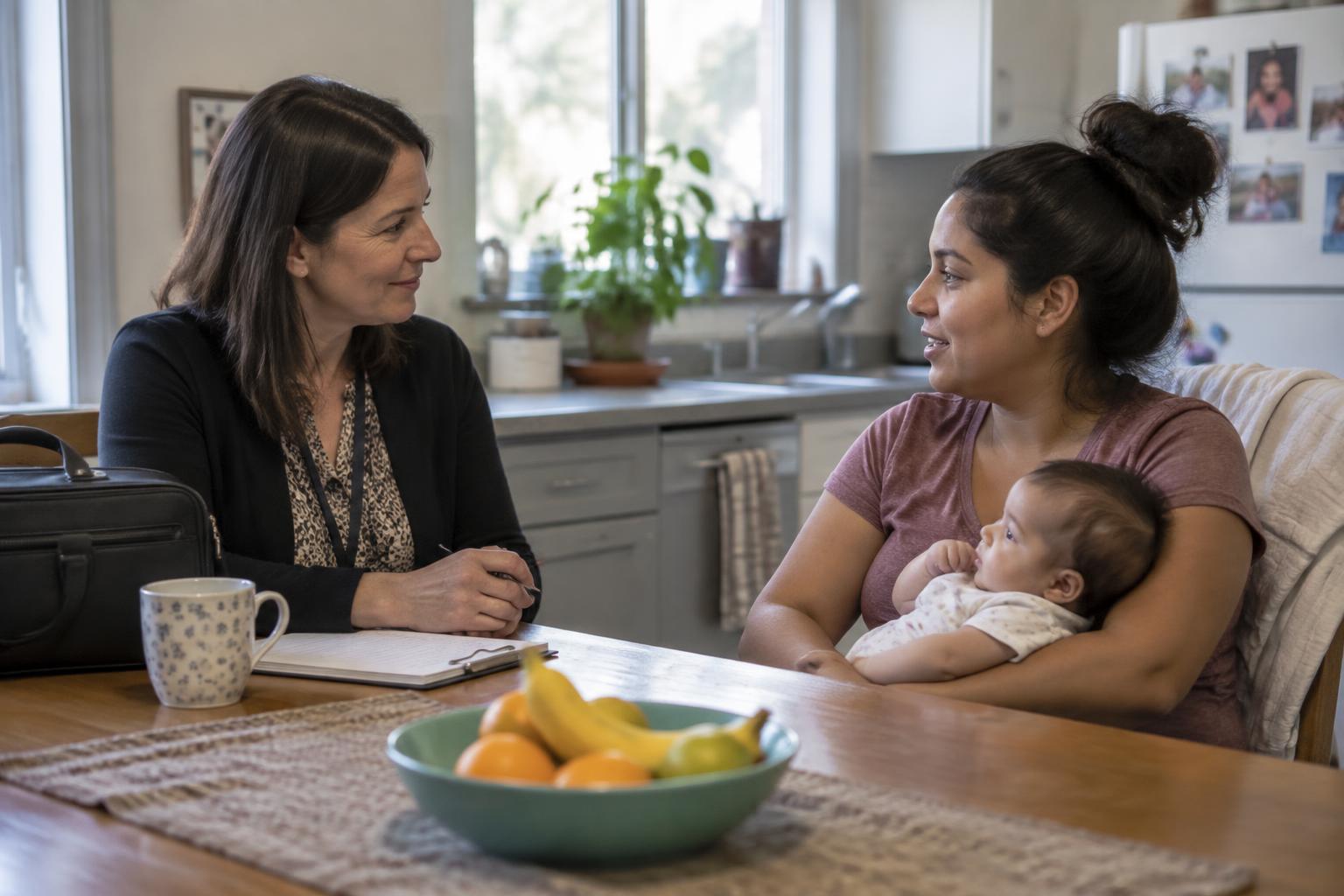
This course explores the critical domain of health visiting and home-based child and family nursing. It is designed for nurses who engage in direct home contact with families and children, providing essential care where it matters most. Nurses completing this course will gain a deeper understanding of the unique aspects of home-based practice, including consent, safety, and establishing appropriate boundaries.
Objectives
Upon completion of this independent study, the learner will be able to:
- Describe the purpose and boundaries of home-based child and family nursing, including the difference between surveillance and diagnosis.
- Explain why the newborn period carries disproportionate risk and how that shapes early home contacts.
- Identify preterm birth categories and the increased vulnerability and follow-up needs of a preterm infant.
- Recognize the presentation of perinatal depression, distinguish it from short-lived baby blues and describe an appropriate response.
- Teach the elements of a safe infant sleep environment accurately, including surface characteristics and unsafe locations.
- Describe current infant feeding recommendations and provide non-judgemental support for the family's feeding situation.
- Conduct developmental surveillance using milestone materials while correctly stating their limits relative to validated screening tools.
- Explain the role of well-child visits, growth records and routine screening within the child's ongoing record.
- Discuss the childhood immunization schedule with families in a way that answers questions without coercion.
- Identify household lead exposure risk, particularly in homes built before 1978, and describe the referral response.
- Describe home-visit conduct, including consent, safety, boundaries and documentation appropriate to another person's home.
Policy Statement
This activity has been planned and implemented in accordance with the policies of CheapCEForNurses.com. This course should be used for informational purposes only and should not be used to diagnose, treat, prescribe, recommend, or initiate therapies or treatments in any setting. This course is copyrighted by Cheap CE For Nurses, Inc. and may not be replicated, copied, or dispersed without written consent.
Disclosures
Cheap CE For Nurses, Inc. and its authors have no disclosures. There is no commercial support.
Who this course is for:
Healthcare professionals who want continuing education on Health Visiting and Home-Based Child and Family Nursing.
Course outline
12 sections · finish in any order across devices
- 1
Course overview and learning objectives
- 2
Introduction
- 3
Purpose and Boundaries of Home-Based Family Nursing
- 4
The Newborn and Preterm Infant at Home
- 5
Perinatal Mental Health in the Home
- 6
Safe Infant Sleep Teaching That Families Can Use
- 7
Infant Feeding Support Without Judgement
- 8
Developmental Surveillance, Screening and Referral
- 9
Immunization Conversations and Preventive Care Uptake
- 10
Household Hazards, Lead Exposure and Closing the Loop
- 11
Nursing Considerations
- 12
Conclusion
References
The full reference list is included inside the course, after the Conclusion.
Purchase required to access Fast Facts, pretests, posttests, course evaluations and certificates. Our one free course is the only exception.
This Course Satisfies
Requirement summaries come from our state requirement records. All Users of Cheap CE For Nurses’s website and content are responsible for knowing their state’s license and renewal requirements.
Questions about this course
- How many contact hours is Health Visiting and Home-Based Child and Family Nursing?
- 3 contact hours, credited at completion.
- How much does it cost?
- $15.00 on its own, or included with All-Access ($29.99 a year, renewing yearly until you cancel).
- Can I listen instead of reading?
- Yes — every section can be read or heard, on your phone or computer.
- When do I get my certificate?
- As soon as you finish the course requirements and the evaluation. It stays in your account.
Update history
Take this course and the rest of the library
Unlimited annual access covers every course, every state you track, and your certificates forever.
ENROLLStill have a question?
Ask about requirements, a course, pricing or your license. Answers come from our own course list and state notes.
Answers come from Cheap CE For Nurses's own course list and our notes on state requirements. Always check your board's own rules before you count hours.